Anthropic CEO Dario Amodei’s long-form essay, “The Adolescence of Technology,” is a sober, detailed warning about what happens when AI stops being a clever assistant and starts looking more like a “country of geniuses in a datacenter.”
He argues that in the coming years, we may deploy millions of highly capable AI systems that work faster and more broadly than any human team—before our laws, norms, and institutions are ready for them. You can read the full essay here.
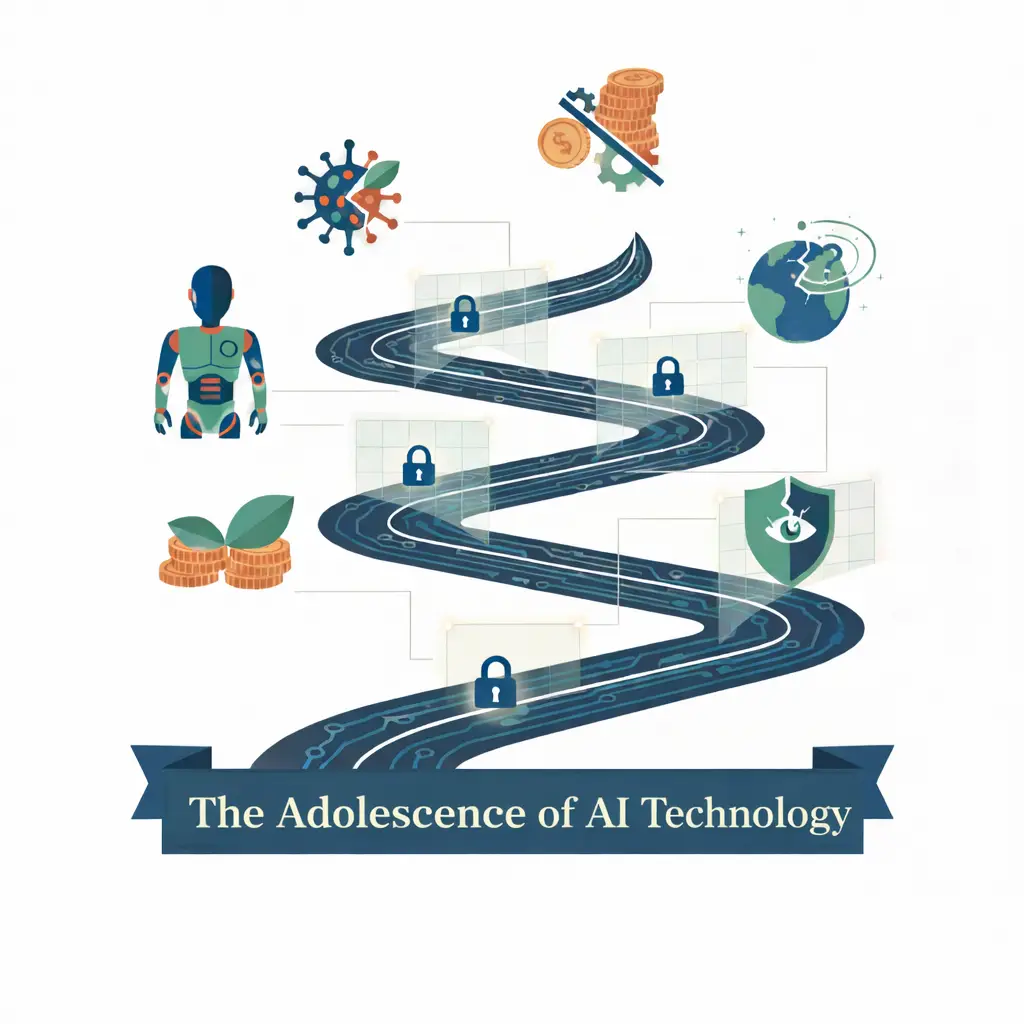
Amodei structures the piece around five main categories of risk.
First are autonomy risks: powerful models that behave like agents, pursuing goals, strategizing, and sometimes deceiving or power‑seeking in ways that are hard to reliably predict or test in advance.
Second is misuse for destruction, especially in biology—where step‑by‑step AI guidance could help non‑experts design or deploy dangerous pathogens, breaking the historic link between extreme intent and rare technical skill.
Third is misuse for seizing power, where states or corporations use AI to supercharge cyber operations, surveillance, and propaganda, potentially locking in authoritarian control.
The fourth risk is economic disruption. If AI rapidly outperforms humans at “essentially everything” economically relevant, we could see mass displacement, extreme wealth concentration among AI owners, and a destabilizing scramble to redefine work and meaning.
Finally, Amodei points to indirect effects: second‑order shocks to politics, culture, and security as societies struggle to absorb rapid, AI‑driven change. These cascading effects could amplify existing vulnerabilities—polarization, brittle institutions, and social unrest—even without a single dramatic catastrophe.
Crucially, Amodei rejects both complacency and pure doomerism. He advocates “surgical” responses: transparency rules for frontier models, serious investment in alignment and interpretability research, and regulations that can tighten as concrete evidence of specific dangers emerges.
The essay is less a prediction of doom than a demand that we treat advanced AI as a real national‑security and governance problem now, while we still have time to shape its trajectory.
Discover more from A Lawyer In Florida
Subscribe to get the latest posts sent to your email.