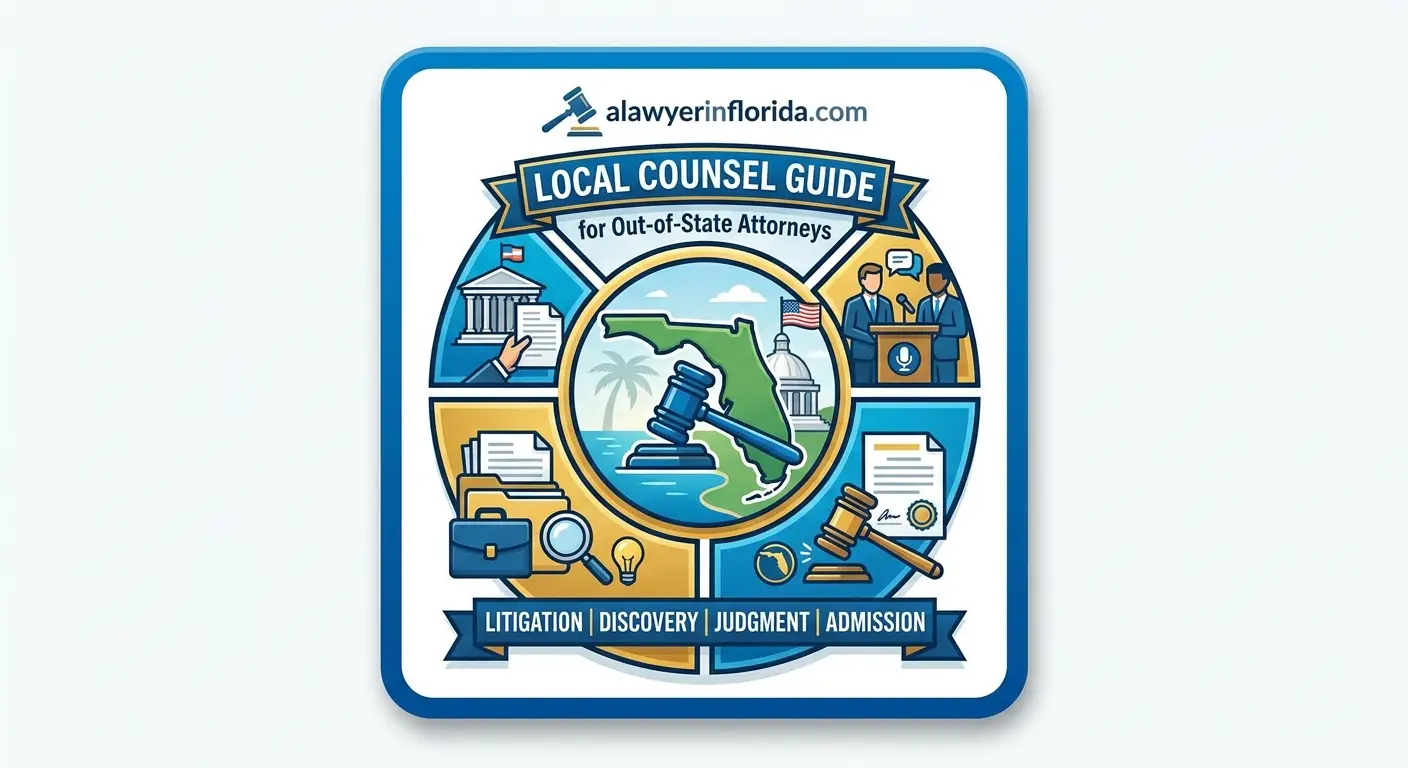
Out-of-state counsel often encounter a Florida issue in an otherwise out-of-state case: a witness who has relocated, records maintained by a Florida business, or a judgment debtor with assets here. Other matters require litigation in Florida, even though the client wants its regular counsel to remain involved.
Florida counsel’s assignment may be limited to discovery or a hearing, or extend through trial and enforcement. Identifying that role early allows the firms to allocate work without duplicating effort or overlooking responsibilities.
Assessing the Florida Matter
Before pursuing a Florida defendant, counsel should evaluate both the claim and the practical prospects for recovery. A lender considering suit against a guarantor, for example, needs to assess jurisdiction, venue, contractual defenses, and available remedies. The location and ownership of assets may be equally important.
Florida counsel can assist before the client commits to a forum or litigation budget. Potential exemptions, liens, and competing claims may affect the strategy and anticipated recovery.
Litigation and Co-Counsel Responsibilities
For Florida state-court proceedings, Florida Rule of General Practice and Judicial Administration 2.510 governs pro hac vice admission. It requires an eligible out-of-state attorney to file a verified motion and associate a member of The Florida Bar in good standing as an attorney of record. The prescribed motion includes Florida counsel’s consent to that association.
The federal system is not uniform. The Northern, Middle, and Southern Districts have their own admission and practice rules, as do their respective bankruptcy courts. Counsel should check the particular court’s requirements rather than assume that admission, sponsorship, or filing procedures carry over from another Florida forum.
The work can extend beyond admission assistance to pleadings, discovery, depositions, motions, evidentiary hearings, and trial. An out-of-state firm may handle factual development and the client relationship while Florida counsel prepares and argues particular motions. Other cases warrant shared responsibility throughout.
Before appearing, counsel should agree who will monitor the docket, calculate deadlines, communicate with the client, and prepare for hearings. Calling an attorney “local counsel” does not establish the scope of the assignment or displace obligations imposed by the court.
Florida Discovery in an Out-of-State Case
A Florida discovery assignment may arise without any expectation of litigating the underlying dispute here. A former employee may possess relevant communications, or a Florida accountant may hold financial records needed elsewhere.
Counsel must determine whether state interstate-discovery procedures or federal subpoena rules apply. The assignment may include obtaining and serving process, negotiating production, taking a deposition, or addressing objections and enforcement.
Privilege, confidentiality, and burden disputes can require substantial work. Coordination helps keep Florida discovery consistent with the underlying case’s needs and schedule.
Judgment Enforcement and Bankruptcy Issues
A creditor holding an out-of-state judgment may need assistance with recognition or domestication, asset discovery, and enforcement. Depending on the facts and applicable requirements, the work may involve garnishment, execution, proceedings supplementary, or voidable transfer claims.
Returning to the guarantor example, an asset search may identify property without establishing that it is available to satisfy the judgment. Ownership, exemptions, and competing interests require further analysis before recommending additional proceedings.
A bankruptcy filing raises questions about the automatic stay and pending litigation or collection efforts. Counsel with bankruptcy experience can evaluate those issues and assist with appropriate relief, adversary proceedings, or contested matters.
Collectibility also affects settlement. Payment terms, security, and the consequences of default may deserve as much attention as the amount.
Defining the Engagement
The engagement should identify the client, assigned tasks, authority, fees, and responsibility for communications and appearances. As the matter develops, the firms should revisit the scope rather than let responsibilities shift by assumption.
Some matters need a discrete Florida assignment. Others benefit from an active co-counsel relationship.
Moritt Hock & Hamroff LLP offers local and co-counsel services in all federal districts and state courts of Florida.
Discover more from A Lawyer In Florida
Subscribe to get the latest posts sent to your email.