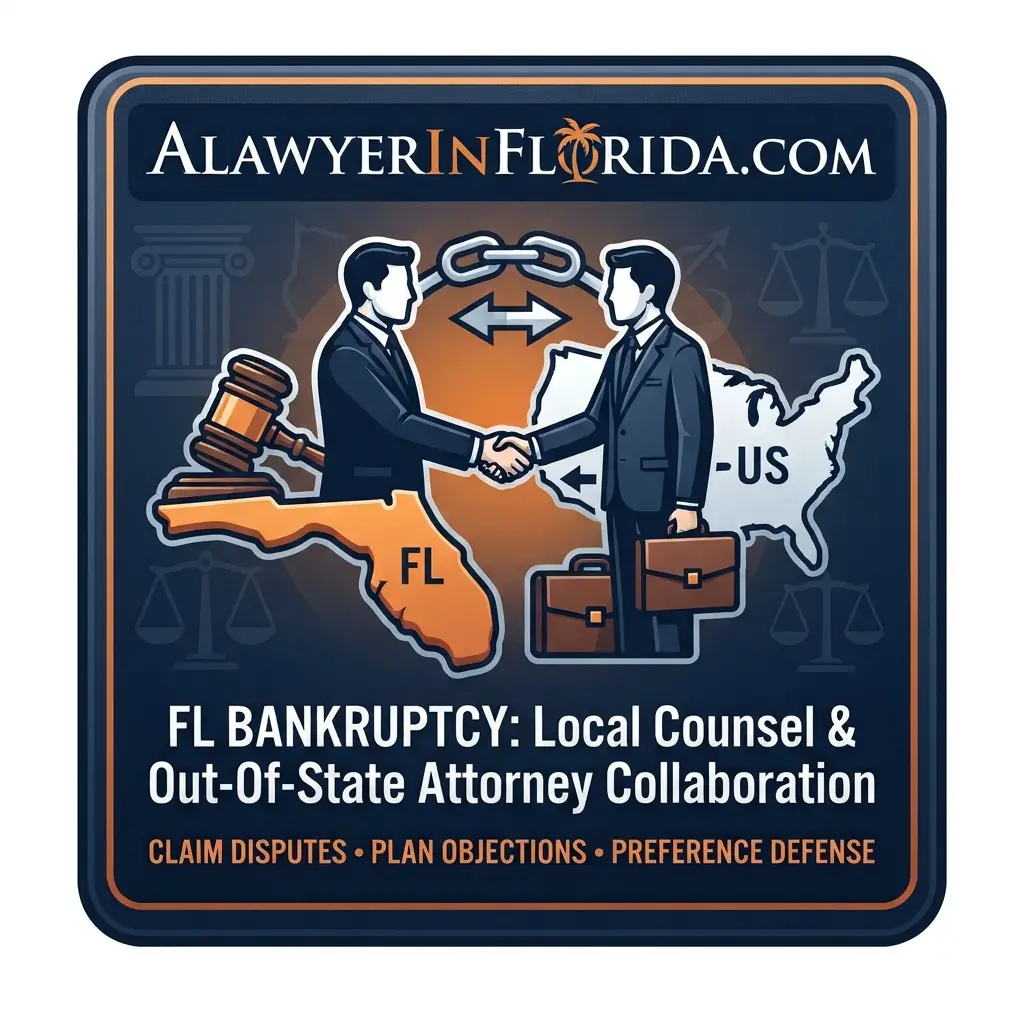
Your firm represents a creditor whose customer has filed bankruptcy in Florida. You may initially be asked to prepare a proof of claim or advise the client how to vote on a plan. The case may later require discovery, a response to a claim objection, or litigation over whether the debt will be discharged.
As discussed in When Your Case Leads to Florida: A Guide for Out-of-State Counsel, local counsel’s role can extend beyond admission assistance. Florida bankruptcy counsel can handle a particular dispute or work alongside the client’s regular attorney throughout the case.
Responding to a Claim Objection
A supplier may submit unpaid invoices, then face an objection alleging that defective goods caused losses exceeding the balance due. Defending the claim may require documents, testimony, discovery, and a hearing under Bankruptcy Rule 3007.
Regular counsel may know the account history and witnesses. Florida bankruptcy counsel can prepare the response, conduct discovery, and represent the creditor at the hearing.
Reviewing the Plan
A creditor that votes against a Chapter 11 plan may also need to file an objection explaining why the plan should not be confirmed. A plan can be confirmed despite rejection by a creditor or class if the applicable requirements of 11 U.S.C. §1129 are met.
Bankruptcy counsel can evaluate the proposed treatment and handle confirmation proceedings. A lender concerned that the debtor cannot make the proposed payments may need to examine its financial projections and present evidence at confirmation.
Protecting Administrative and Priority Claims
A supplier continuing deliveries after bankruptcy may have grounds to request administrative-expense treatment under 11 U.S.C. §503. Certain goods received before filing may also qualify. Other claims may receive priority under 11 U.S.C. §507.
Bankruptcy counsel can evaluate the claim, prepare the required request, and handle disputes over allowance or payment. A prepetition proof of claim should not be assumed to cover later deliveries or satisfy administrative-payment procedures.
Obtaining Records and Testimony
A creditor may need records or testimony to investigate transfers, identify assets, or evaluate the debtor’s disclosures. Bankruptcy counsel can determine whether to seek an examination under Bankruptcy Rule 2004 or use discovery procedures applicable to pending litigation.
Addressing Discharge
For individual debtors, counsel should consider whether a particular debt should survive discharge under 11 U.S.C. §523. In Chapter 7, misconduct may support an objection to the debtor’s discharge under 11 U.S.C. §727.
Regular counsel can develop the underlying facts while bankruptcy counsel evaluates the grounds and handles the proceeding. The deadlines under Bankruptcy Rule 4007 and Bankruptcy Rule 4004 should be reviewed early enough to investigate and prepare any complaint.
Responding to Preference Demands
A client may receive a demand to return payments received before bankruptcy, even while it remains owed money. A trustee or debtor may seek recovery of those payments as preferences under 11 U.S.C. §547.
Regular counsel can assemble invoices, payment records, and the transaction history. Bankruptcy counsel can assess defenses, including ordinary-course payments or subsequent new value, negotiate a resolution, and defend any resulting lawsuit.
Defining the Assignment
Stay relief, collateral protection, financing, and sales may require action before a plan is proposed. Florida counsel can handle those proceedings without taking over the client relationship.
The firms should check the particular bankruptcy court’s admission and local-counsel requirements. Bankruptcy Rule 9010 addresses representation, but submitting a claim or ballot should not be assumed to authorize an attorney to litigate there.
The engagement should identify who will review notices, track deadlines, prepare filings, communicate with the client, and attend hearings.
Moritt Hock & Hamroff LLP offers local and co-counsel services in Florida bankruptcy courts, including creditor representation and preference defense.
Discover more from A Lawyer In Florida
Subscribe to get the latest posts sent to your email.