In Florida probate, creditor claims are tightly governed by statute and court rule, and a missed deadline can permanently bar recovery. This article outlines the notice process, claim requirements, outside bars, how the personal representative’s proof of claim operates, the claims‑resolution process, and practical tips for creditors.
Notice to creditors and key deadlines
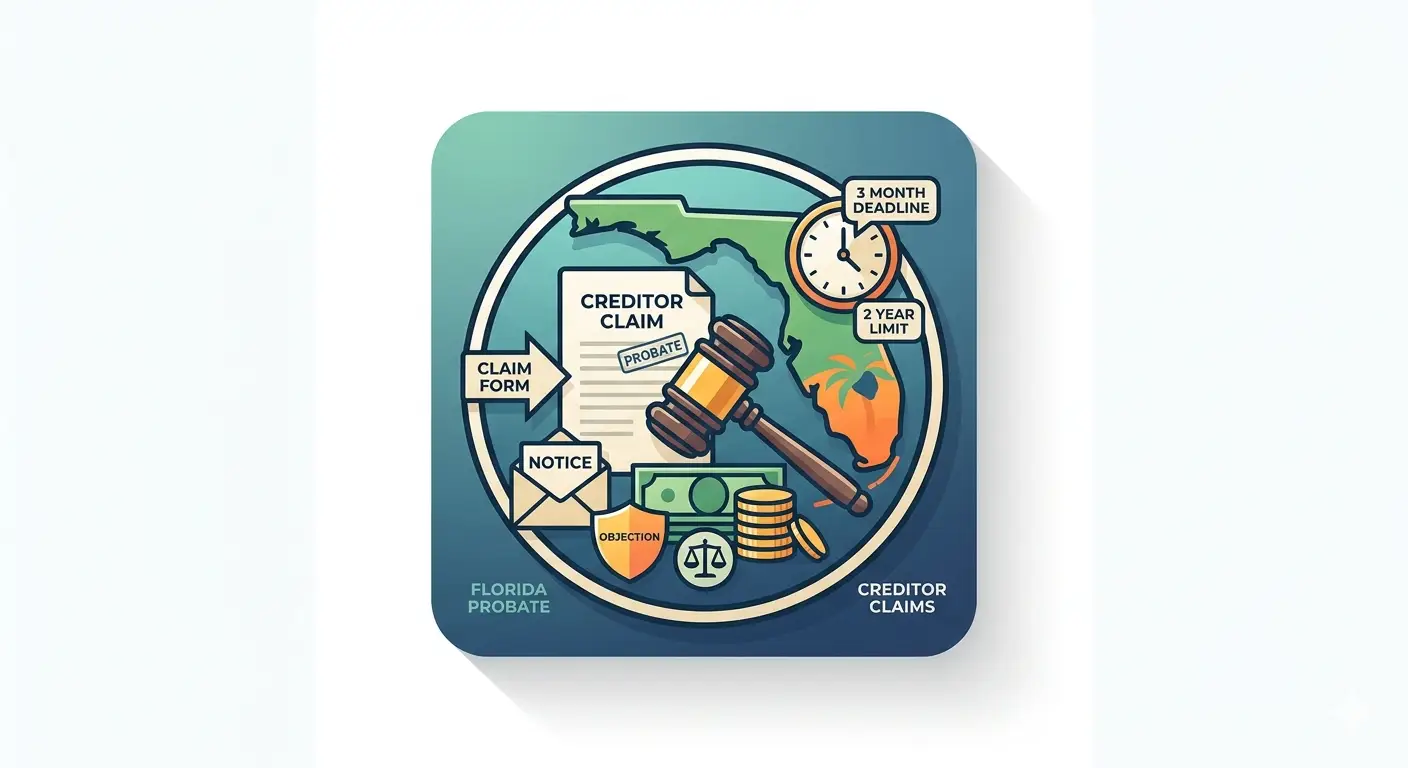
Once appointed, the personal representative (PR) must publish a Notice to Creditors and serve known or reasonably ascertainable creditors with direct notice pursuant to section 733.2121, Florida Statutes. The notice advises that claims must be filed within the time periods set by section 733.702, generally the later of 3 months from first publication or 30 days from service of the notice. Section 733.710 separately imposes an absolute two‑year non‑claim bar after death, after which no claim may be enforced against the estate, PR, or beneficiaries.
Form and filing of the claim
A creditor presents its claim by filing a written statement of claim in the probate proceeding identifying the basis, amount, and character of the debt, including whether it is contingent or unliquidated. Section 733.703 and the Florida Probate Rules govern form and manner, and a late or facially deficient claim can be stricken on motion. Given the harsh consequences of non‑compliance, creditors should use consistent formats and double‑check style, estate name, and service details before filing.
When the personal representative files for other creditors
Florida law permits the PR to file a proof of claim listing debts the PR has paid or intends to pay, including obligations owed to third‑party creditors who have not independently filed. When a creditor’s debt appears in this proof of claim, the creditor is treated as if it had filed its own timely statement of claim, which streamlines payment of routine, undisputed expenses such as final utilities or modest medical bills. Interested persons can still object, and disputes over whether the estate should bear a listed debt, or whether the PR acted properly in paying it, can be addressed through objections, accountings, or surcharge proceedings.
Claim‑resolution process and downsides of filing
After a claim or PR proof of claim is filed, the PR or any interested person may pay it, negotiate it, or object within the statutory objection period under section 733.705. If an objection is served, the creditor must commence an independent civil action on the claim within 30 days or the claim is deemed abandoned and not payable from the estate. Filing a claim can therefore trigger fast‑moving litigation, expose the creditor to court costs and potential fee‑shifting, and subject the claim’s documentation and collection history to close judicial scrutiny. For most creditors, however, the greater risk lies in failing to file at all and running afoul of the short presentation windows and the two‑year non‑claim statute.
Practice tips for creditors
Here are practice‑oriented tips for creditors considering or pursuing a probate claim in Florida:
- Do not rely on informal assurances; once you learn of a debtor’s death, identify the probate case promptly and assume deadlines are running.
- Calendar the 3‑month publication deadline, any 30‑day service‑based deadline, and the two‑year non‑claim date separately, and treat the two‑year bar as an absolute cut‑off.
- File a clear, well‑documented claim that states the legal basis and amount and includes key supporting records you would be comfortable presenting in litigation.
- Anticipate objections and be ready to sue under section 733.705. Treat every claim as potentially contested: if an objection is served, section 733.705(5), Florida Statutes, generally gives you only 30 days to file an independent civil action (or obtain a written extension or court‑ordered enlargement), and failing to do so will bar further proceedings on the claim.
- Weigh the expected recovery against costs and fee‑exposure before pressing a marginal or poorly documented claim, and explore negotiated resolutions with the PR where appropriate.
Discover more from A Lawyer In Florida
Subscribe to get the latest posts sent to your email.