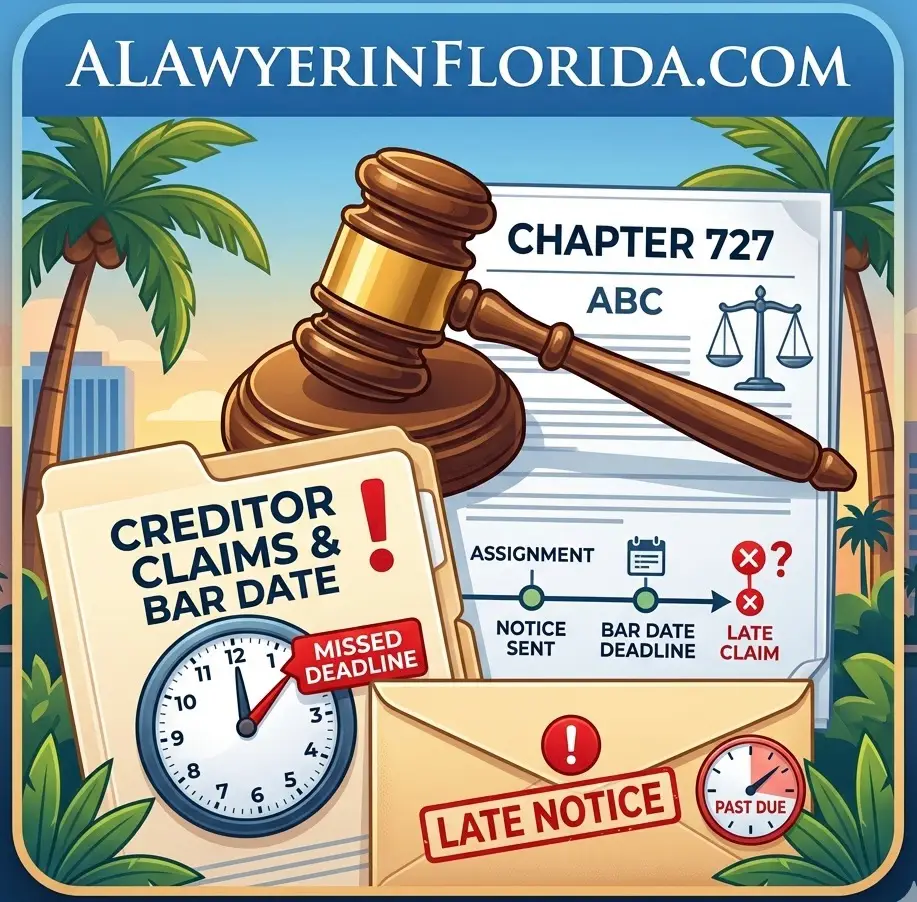
Assignments for the benefit of creditors, or “ABCs,” tend to fly under the radar in Florida. For many business owners, they feel like a quiet bankruptcy you only hear about when a customer has already shut the doors. The real trouble spots are the claim deadline, the objection process, and what you can do if you find out about the case after the deadline has already passed.
How a Florida ABC Starts
In an ABC, the debtor signs over its assets to an assignee, who then files in circuit court under Chapter 727, Florida Statutes. Section 727.104 covers starting the case, and section 727.108 lays out the duties of the assignee to collect, protect, and liquidate assets, then pay creditors according to the priorities in section 727.114.
Notice and the Claims Bar Date
The assignee has to get word out that the case exists. Section 727.111 requires notice in a local newspaper once a week for four weeks, with the first ad running within ten days after the petition is filed. The assignee must also mail notice to all known creditors within twenty days, and that notice must include the “claims bar date” from section 727.112(2), which is generally 120 days from the petition date. That four-month window is the usual last day to file a proof of claim.
After You File: Objections to Claims
Filing a claim is not the end of the story. Under section 727.113, the assignee and any creditor or other party in interest can object to another creditor’s claim. Common grounds include: no backup documents, the numbers do not match the contract, or the creditor is asking for a priority it is not entitled to under section 727.114. If you are owed meaningful money, it is worth asking for the claims register and making sure nobody is cutting ahead of you.
Finding Out After the Deadline: Lack of Notice and Due Process
The real headache is learning about the ABC after the 120‑day bar date has come and gone. Section 727.112 sets a firm deadline, but it does not override basic due process. A known or reasonably identifiable creditor is supposed to receive mailed notice under section 727.111 before its claim is cut off. If you never received that notice, you may have an argument that the bar date should not be enforced against you.
In practical terms, that means moving quickly. As soon as you find out about the case, file your proof of claim and ask the court to allow it late because you were not properly notified, tying your request back to the notice requirements in section 727.111. Be ready to explain when you learned of the ABC, how you should have shown up in the debtor’s records, and what your claim is based on. Judges tend to balance fairness to you against the expectations of creditors who did file on time.
Discover more from A Lawyer In Florida
Subscribe to get the latest posts sent to your email.